How to Assemble a New Bike
Overview of a boxed bike assembly. Shows how to put together a mail-order bike.
These days you can get a great deal on a new bike by ordering online. Today we’ll learn how to properly assemble a mail order bike right out of the box. Since there are so many different types of bikes and components available, I’ll give a brief overview of the assembly. If you’re watching this video on bikeride.com, you can check the links in the text below for more specific instructions.
Tools
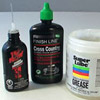
For this job you’ll need several tools. Ideally you should have a repair stand and a wheel truing stand. Other necessary tools include wire cutters, a set of metric allen keys, a set of metric open-end wrenches, flathead (-) and phillips (+) screwdrivers, cone wrenches, a pedal wrench and an air pump. You’ll also need some waterproof grease, chain oil and a rag.
Unpacking
Open the top flap and carefully pull everything out of the box. Apply some grease to the inside of the seat tube, slide the seatpost in to the minimum insertion mark, grease the threads of the seatpost bolt and tighten it just enough so it will hold the weight of the bike. Then clamp the seatpost in your repair stand.
Remove the front wheel by using wire cutters to carefully snip the zip ties. To save these for future use, cut them just before the head and then pull out and recycle the remaining piece of zip-tie. This leaves you with a short piece of zip-tie that can be used again for odd jobs. Remove the rest of the packaging and either recycle it, or save it so you can box your bike up in the future.
Assembly
If your headset and bottom bracket have loose ball bearings, open them up and check for grease and adjust as needed. If you have sealed cartridge bearings in these places you can skip this step.
Now we’re ready to install the handlebar. Grease all of the stem bolt threads and shaft if you’re installing an older quill-style stem. Then center the handlebar and tighten the stem bolts evenly so the gap is equal on both sides. Tighten the top cap just enough to hold it in place.
Remove the rear wheel and cassette or freewheel, and open the hubs on both wheels to check for grease. Add more grease as needed and then adjust the hub cones so they spin freely with very little play. See the hub overhaul tutorial for adjustment instructions. Grease the cassette or freewheel’s threads before re-installing them.
Watch the wheel-truing tutorial to see how to de-stress and true the wheels. Then inflate the tires to the recommended pressure and install both wheels on the bike.
It’s a good idea to grease the threads of the crank bolts, chainring bolts, and other bolts that hold accessories like water bottle cages. This will help them repel water and dirt and stop them from seizing up. Grease the pedal threads and install them. Remember that the left pedal always has a reverse thread, so you have to tighten it by turning counter-clockwise.
Set up and adjust your brakes. See the brake tutorials page for set-up instructions on specific brake types. Then lube the chain and adjust the derailleurs. Watch the front and rear derailleur tutorials to see how.
Apply any stickers and/or accessories and then remove the bike from the stand. Adjust your seat height and angle, align your handlebars and adjust your headset. See the headsets and handlebars pages for related tutorials… and then get out for ride!

Related Links
- Mtn Bike Riders: Mail-Order Bike Assembly
- Park Tool: New Bike Assembly
- Bicycle Torque Specifications
Recommended Tools
- Park Tool SK-3 Starter Mechanic Tool Kit
- Park Tool PK-3 Professional Tool Kit
- Park Tool PCS-9 Repair Stand
- Park Tool PCS-4 Repair Stand
- Park Tool TS-8 Home Truing Stand
- Park Tool TS-2.2 Home Truing Stand
Categories
Discuss this topic in the Bicycle Repairs and Mechanics Forum
Specialized expedition in need of repair
Latest post 2 days agoHello I have recently pulled my 2005 specialized expedition out of the garage. It's in need of some repair due to it being damaged by super storm sandy. My shed was flooded with ocean water. The frame itself looks perfect but the moving parts have some rust. Including the fork, brakes, and gears. I'm just looking for replacement parts I have no intentions on buying a new bike. Please help than...
Read moreRear hub issue
Latest post 6 days agoI have a 10-year-old 105 rear hub, and one of the pawls is acting up, I cleaned it and relubed the hub pawls but it still won't engage as fast as it did, like one of the pawls isn't working. I think it might be time to get a new hub. I would like one that engages faster but don't want to spend the money for something like the DT Swiss hub, what recommendations do any of you have for a hub? Or i...
Read moreTyres keep popping off wheels...
Latest post 2 weeks agoHello guys Just bought a new pair of 700c hybrid wheelset with an inside rim width of 19mm. I have tried to fit schwalbe 700 x 40c tyres on them but the tyres just pop out from the rim when inflated. It seems to be a loose fit. Somebody please advise. Thanks...
Read moreWhat tools have you bought recently?
Latest post 2 weeks agoI'm slowly eliminated all LBSes in my area as options for servicing, LOL. The latest one has been struck off my list after watching, pained, their approach to removing the axle end caps from a hub with cartridge bearings. Suffice to say, I finally ordered a blind bearing puller kit and a bearing press kit. If you want something done properly, you have to do it yourself! Have you bought any nic...
Read moreModern rims crack at spoke holes
Latest post 2 weeks agoRecently, I was in one of the local bike shops. Someone had brought a bike back to have the back wheel re-trued. There were actually cracks in the rim, originating from the spoke holes. I have had the same problem with my bike. In past decades you could buy a bike, and the wheels were strong. With modern rims, the aluminum is getting thinner and thinner. Now the rims crack. With heavy riders, a...
Read moreAre all folding tyres made of Kevlar bead?
Latest post 3 weeks agoHello guys I understand cheaper regular tyres are made with a steel wire bead. But are all folding tyres made of Kevlar bead? I have just purchased a set of tyres as per attached photo and wanted to know if the bead is Kevlar. Can anybody please help? Thanks...
Read moreTire bead won’t seat into rim
Latest post 3 weeks agoI bought a Tamobyke V20. Both the front and rear tire beads slide off the rim when inflating much at all. How do I get them to sit in there where they belong? Pics attached ty!!! IMG_3164.jpeg (Size: 61.62 KB / Downloads: 42) IMG_3173.jpeg (Size: 46.46 KB / Downloads: 41) ...
Read moreHeadset overtightening
Latest post 3 weeks agoI have a Fondriest and could not get the headset to tighten without over tightening and then it will not steer properly because of heavy drag on the bars. I replaced the headset with no change so I replaced the steel fork with s Hylix carbon fiber bar and another new heatset and pinch steering head lock. Still it wont adjust properly. it acts as if the bottom headset bearing is too deep in the cup...
Read moreThread busted on right pedal crank
Latest post 3 weeks agoHi Ive joined to specifically ask about a problem which may have been covered before Im sure. My right pedal broke so I had to replace it. Then had issues getting the new pedal to go on straight so I was riding with it slightly at a bend. But then it just came loose and fell off. Problem is now the thread seems busted and the pedal just slots in with no screwing needed because the hole is enlar...
Read moreCup & Cone — Simple & Durable or PITA & Outmoded?
Latest post 4 weeks agoCup and cone hubs have long been considered simple, durable, easily maintained, and reliable. Having messed around with a couple of older hubs tonight, I ended up looking at my sealed-bearing hubs with increased fondness. I'm wondering what other people think. Should we old farts just accept that modern hubs with cartridge bearings are the way forward?...
Read moreTrek domane tyre
Latest post 1 month agoHi I have a trek domane 2.3, and I have changed the rear tyre to 28 (it was 25 originally) The tyre rubs with the brake arm (v brake), I fear it doesn’t seem to be compatible Is there any way to adjust the position of the brake arm? I just need it to ne around 2mm higher Thanks...
Read moreFalling back
Latest post 1 month agoIn December of 2009 I had a first generation carbon fiber fork break on my road bike and it dropped me right on my forehead. This gave me a very serious concussion and both ER doctors and most neurologists do not take them serious. So it took about two years of my slowly dying since I couldn't even remember to eat before my Cop friend took me to a proper neurologist who diagnosed it as a concussio...
Read moreDerailluer Hanger Alignment Tool
Latest post 1 month agoI cannot express enough about the importance of this tool when having to deal with multi speed bicycles. I have been in the bicycle biz in one fashion or the other for over 30 years. Have sold many new bicycles and 90% have been out of wack fresh from the box. With used bikes crossing your path you should just expect it to be bad. And never string new cables without checking the hanger first, ever...
Read moreChain sits on top of chainring when shifting up
Latest post 1 month agoHey guys, First post here. I've tried searching, but I don't know what you call this. I have a vintage Schwinn Passage that I picked up a few months ago. At first it worked well, but recently it's been giving me trouble. When I shift, the chain pops into the higher (larger) gear, but then sits on top of the chain ring. What ends up happening is that the chainring will keep turning, and eve...
Read moreWTB Raddler TCS 40c, small cut - repairable?
Latest post 1 month agoWent to fix the slow leak on my gravel bike's rear tyre. Found the culprit: a small cut near the middle of the tyre. The good news is it gave me an excuse to order a pair of Panaracer 43c semi-slick GravelKings (most of my local rides are more road-focused) to try out. Meanwhile, I was considering ye olde vulcanised patch repair to the inside of the tyre and superglue to the outside, but I'm thi...
Read more